
Ethylene Oxide (EtO) Analysis
Detecting Ethylene Oxide (EtO) to 0.040 ppbv is now possible in ambient air with SGS’s evacuated canister[...]
First Silicosis Case Confirmed from Engineered Stone Exposure
The risks associated with respirable crystalline silica are well documented, yet recent public health alerts[...]
26
Feb
Feb
ASTM Releases First-Ever Standard Method for Ultrashort PFAS: ASTM D8628-25 Authored by SGS
A significant achievement in global PFAS measurement, enabling accurate quantification of ultrashort PFAS for regulators,[...]
03
Feb
Feb
EPA Proposes New Threshold for Formaldehyde Risk
By: Ed Stuber If you’ve been following regulatory activity around chemical exposure, you know that formaldehyde has remained a complex and[...]
21
Jan
Jan
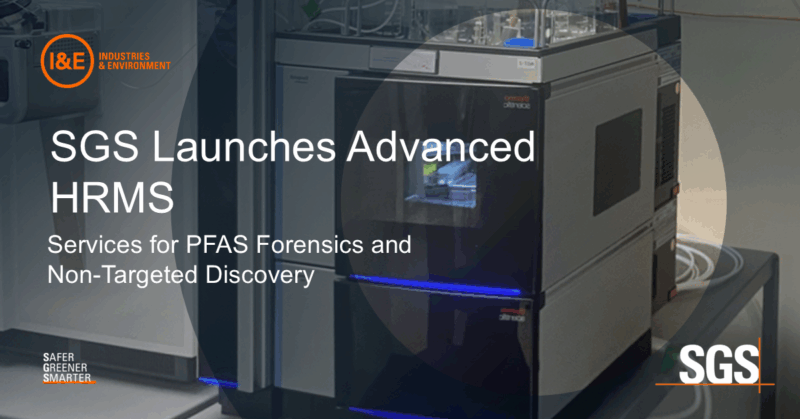
SGS Launches Advanced High-Resolution Mass Spectrometry (HRMS) Services for PFAS Forensics and Non-Targeted Discovery
SGS North America is pleased to announce the launch of our enhanced High-Resolution Mass Spectrometry[...]
07
Jan
Jan
SGS Dayton, NJ Laboratory Introduces Reduced Sample Volume Methods for Groundwater Programs
SGS is advancing environmental testing innovation with the implementation of Reduced Sample Volume (RSV) methods[...]
20
Nov
Nov

How to Prevent PPI Overloading: Lessons from the Field
When conducting respirable particulate sampling, environmental conditions and procedural factors can sometimes affect the accuracy[...]
30
Sep
Sep
New AIHA Heat Stress Mobile App 2.0 Expands Protection for Indoor and Outdoor Workers
Last month, we discussed the challenges of high temperatures in schools and how SGS SmartSense[...]
25
Aug
Aug
Client Appreciation Week Starts August 11
At SGS, we believe strong science must be backed by even stronger service. Every project[...]
06
Aug
Aug
SGS Anchorage Lab Achieves DoD-ELAP Accreditation for PFAS by EPA 1633A in Aqueous Solids
We’re proud to announce that our SGS Anchorage laboratory is now accredited by the Department[...]
05
Aug
Aug